
How Old Do You Have to Be to Play Airsoft?
Most fields set 10 to 12 as the minimum age with a parent-signed waiver, and most retailers require you to be 18 to buy. The US age rules explained.
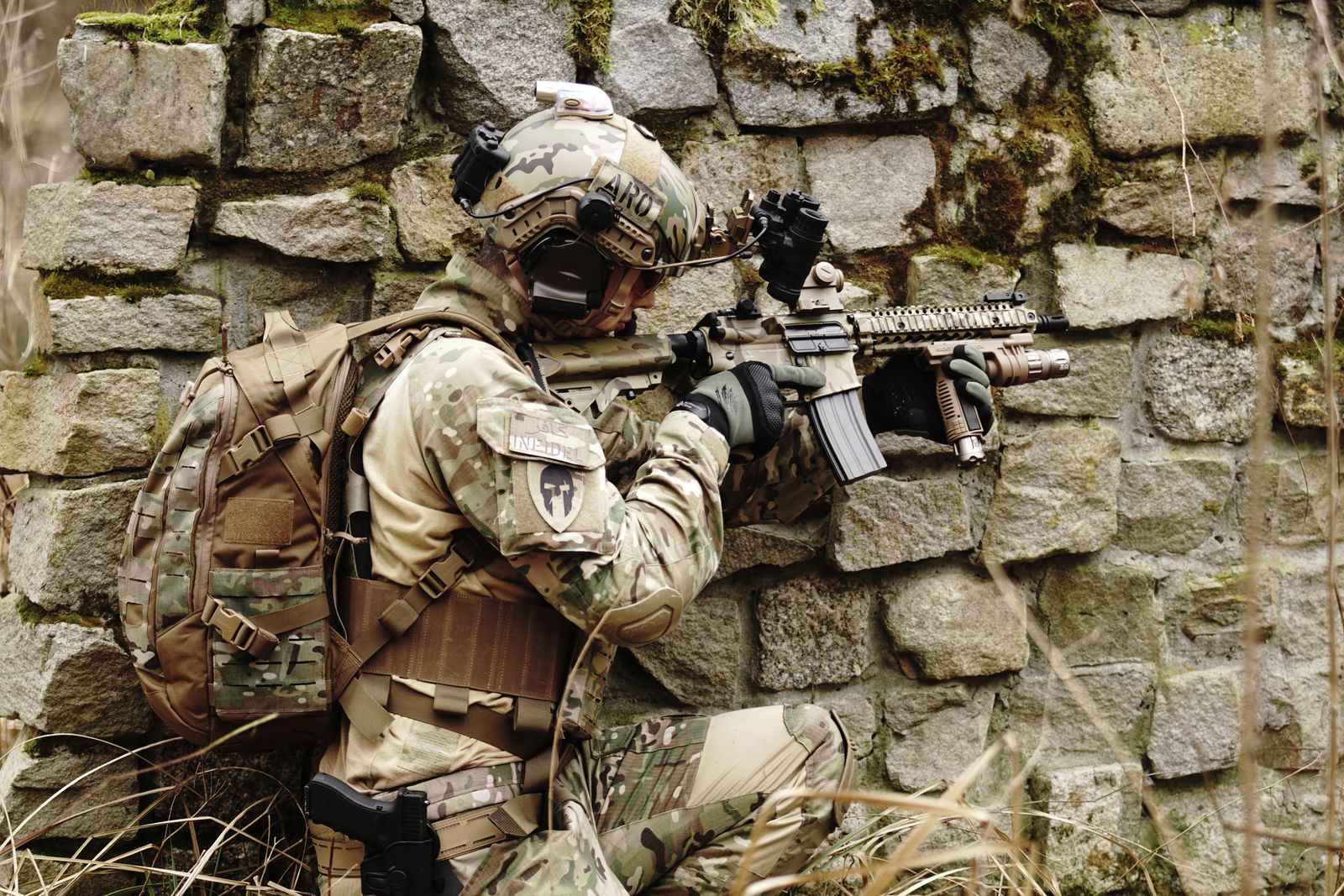
There is no federal minimum age to play airsoft in the United States. The rules that actually govern you come from three separate places, and they rarely agree with each other: the field you want to play at, the retailer you want to buy from, and your state or city.
For most people the practical answer is 10 to 12 years old to play at a field with a parent present, and 18 to buy an airsoft gun yourself. Below is how each of those pieces works.
How old do you have to be to play airsoft at a field?
Fields set their own minimum ages, and they are not standardized. In practice they cluster into a few tiers:
| Typical minimum | What it usually means |
|---|---|
| 10–12 years old | The most common minimum, almost always requiring a parent or guardian to sign a waiver and often to remain on site |
| 13–14 years old | Common at fields that run mixed adult games rather than separate junior sessions |
| 16 years old | Some indoor CQB fields, where engagement distances are short |
| 18 years old | A minority of fields, plus most milsim events |
Many fields run dedicated junior or family games with lower FPS caps and mandatory full-face protection. If you are bringing a younger player, these are considerably better than dropping them into a general admission game.
A minor will always need a waiver signed by a parent or legal guardian. Some fields accept a signed form sent along with another adult; many require the parent to be physically present. Call ahead — this is the single most common reason families get turned away at the door.
How old do you have to be to buy an airsoft gun?
This is where it gets stricter, and where most of the confusion lives.
Federal law does not set a purchase age for airsoft guns. What it does set, under regulations administered by the Consumer Product Safety Commission, is a marking requirement: imitation firearms must carry a blaze orange muzzle tip or equivalent marking. That is a manufacturing and import rule, not an age rule.
The age restrictions come from retailers and states:
- Most major online retailers require you to be 18 to purchase. This is their own policy, driven by liability rather than federal law. Checkout will typically ask you to confirm your age, and shipping may require an adult signature.
- Many states restrict sales to minors outright, and some require adult supervision for possession by anyone under a set age.
- A parent buying for a child is generally fine in most states, which is how the overwhelming majority of younger players get their first gun.
State and city rules that catch people out
Airsoft law in the US is a patchwork, and the strictest rules are usually municipal rather than statewide. A handful of places are strict enough that retailers refuse to ship there at all:
- New York City has some of the tightest imitation-firearm rules in the country, which is why so many retailers will not ship airsoft guns into the five boroughs regardless of the buyer’s age.
- New Jersey has historically treated some airsoft guns restrictively, and retailer policies there are correspondingly cautious.
- California requires bright coloration or markings on imitation firearms, affecting what can legally be sold.
- Chicago and several other cities have local ordinances stricter than their state law.
We go through this in detail, including why your order gets cancelled at checkout, in why airsoft guns won’t ship to New York.
This is general information, not legal advice. Airsoft rules change and vary by city as much as by state — check your own local ordinance before buying.
Is there a minimum age to own an airsoft gun?
Ownership and purchase are treated differently. In most states a minor may possess an airsoft gun that a parent bought for them, frequently with conditions attached — supervision by an adult, use only on private property with permission, or transport only in a case.
The practical rules almost every family lands on:
- Transport the gun in a case, never in the open. An airsoft gun in a car window or slung over a shoulder in public is the fastest way to a police call, and those encounters have gone badly.
- Leave the orange tip on. Removing it is legal in many places but removes the one visual cue that tells a stranger it is not a real firearm.
- Use it at a field or on private property with the owner’s permission. Firing in a public park or a front yard is where most complaints originate.
What age should a child start airsoft?
Legality and readiness are different questions. Around 10 to 12 is where most players and fields land, for reasons that have little to do with the rules:
- They need to keep their eye protection on without being reminded. This is the entire safety model of the sport, and a player who lifts their goggles to wipe fog is the one who gets hurt.
- They need to call their own hits honestly. Airsoft has no referee-visible paint splatter — it runs on players admitting when they are hit.
- They need to handle being shot at without it stopping being fun. Getting hit stings, and how much that matters is covered in does airsoft hurt.
Full-face protection matters more for younger players, not less. A mesh lower mask plus sealed goggles removes essentially all of the dental and facial risk, which is the thing parents worry about most.
Airsoft vs BB guns and pellet guns
Worth clearing up, because the age rules are genuinely different. Airsoft guns fire lightweight 6mm plastic BBs at relatively low energy and are designed to be shot at people wearing protection. Traditional BB and pellet guns fire metal projectiles at much higher energy and are never safe to shoot at a person.
Many states set a specific minimum age for metal-projectile BB and pellet guns while leaving airsoft in a looser category. Do not assume a rule you read about one applies to the other.
The short version
Expect a field minimum somewhere between 10 and 12 with a parent-signed waiver, and expect to be 18 to buy a gun online yourself. If you are under 18, a parent purchasing on your behalf is the normal route and is legal in most states.
Call the specific field you plan to visit before you go — their age policy, waiver requirements, and whether a parent must stay on site are all field-specific and none of them are guessable from a website.
New to the sport entirely? Start with what is airsoft, then our guide to the best airsoft guns for what to buy first.
Frequently asked questions
Can a 10 year old play airsoft?
At many fields, yes. Ten is the most common minimum age, though it almost always requires a parent or guardian to sign a waiver and frequently to stay on site. Junior-specific games with lower FPS limits are the better option at that age.
Can a 12 year old buy an airsoft gun?
Not from most retailers. Major online sellers require purchasers to be 18 as a matter of company policy. A parent buying on a child’s behalf is legal in most states and is how most younger players get their first gun.
Do you need to be 18 to play airsoft?
No. Most fields admit players well under 18 with a parent-signed waiver. A minority of fields and most milsim events set an 18+ minimum, so check the specific field first.
Is there a federal minimum age for airsoft in the US?
No. Federal regulation covers the blaze orange muzzle marking on imitation firearms, not a minimum age. Age restrictions come from state law, local ordinances, and retailer policy.
Do airsoft fields require a parent to be present?
Many do for players under 18, and nearly all require a parent-signed waiver. Some accept a notarized form with another adult present. Policies vary field to field, so call ahead.