Tokyo Marui VSR-10 Pro Bolt Action Airsoft Rifle, Black
Best price we found
$195.95
at Airsoft Station
Save $59.05 (23%) versus the highest price we track
✓ In stock at 3 retailers
View at Airsoft Station Compare all 3 retailersOpens an Amazon search — we do not track Amazon prices or stock, so check them there.
Price comparison
| Retailer | In stock | Price | Difference | Link |
|---|---|---|---|---|
| Airsoft Station Best price | Yes | $195.95 | — | View deal for $195.95 at Airsoft Station (opens in a new tab) |
| Airsoft Junkiez | Yes | $225.49 | +$29.54 | View deal for $225.49 at Airsoft Junkiez (opens in a new tab) |
| Evike.com | Yes | $255.00 | +$59.05 | View deal for $255.00 at Evike.com (opens in a new tab) |
Prices last checked 24 hours ago. Always confirm on the retailer site before buying.
Price history
- Lowest tracked $195.95
- Highest tracked $295.00
- Price changes recorded 24
Based only on prices we have observed since tracking began.
About this airsoft gun

The Tokyo Marui VSR-10 is the pattern that a large slice of the airsoft sniper aftermarket is built around, and the Pro is the plain version of it: a full-length outer barrel, no mock suppressor, and a spring mechanism you cock by hand before every single shot. Owning one is a different proposition from owning an AEG, and it is worth understanding what that means before you commit.
What you are actually buying
This is a spring-powered bolt-action rifle. There is no battery, no gearbox and no gas reservoir anywhere in it. Working the bolt back compresses a spring behind a piston and chambers a BB; the trigger releases the piston. One shot per cycle, every time.
The upside is indifference to conditions. Gas guns lose pressure when it is cold and AEGs slow as a battery drains, but a spring rifle throws the same shot in January as it does in August. The downside is blunt: your rate of fire is however fast you can run the bolt and re-acquire, which is slow enough that one missed shot usually ends the engagement in the other player’s favour.
The stock and furniture are polymer rather than wood or metal, so the weight and feel come from the cylinder and internals rather than a milled receiver. Read the listing carefully for what is actually in the box — magazine, scope mount, sights — because a bolt-action rifle with no optic and no way to mount one is not usable on a field.
Power, internals and the upgrade path
Tokyo Marui builds for the Japanese domestic market, where the legal energy limit on airsoft guns is lower than the chrono caps most sites in the US and Europe run. That matters more on a bolt-action than on anything else, because reaching past the AEGs around you is the entire point of carrying one. Check the listed velocity against your field’s limit before you order, and check which BB weight that limit is measured at — many sites publish a separate, higher cap for bolt-action rifles, paired with a minimum engagement distance you are then obliged to respect.
This is also where the platform’s real advantage sits. VSR-pattern internals are produced by a long list of aftermarket manufacturers: cylinders, cylinder heads, pistons, springs, spring guides, hop-up units, inner barrels and replacement trigger assemblies all drop into this receiver. Very few airsoft platforms have that depth of parts support, and it changes what the rifle is. A VSR-10 is rarely a finished gun — it is a chassis you build on.
If you upgrade, upgrade in order
- Hop-up and inner barrel first. Consistency comes from how cleanly the BB is lifted and how well the air behind it is sealed, not from raw power. This is the change that does the most for your grouping.
- Compression second. Cylinder, cylinder head, piston and piston head, working as one sealed system. A stronger spring bolted onto a leaky compression chain buys you noise and inconsistency, nothing else.
- Spring last, and only to what your field permits. Fitting a spring that puts you over the local cap turns a good rifle into a range toy you cannot bring to a game.
- Trigger assembly if you go heavy. Stronger springs load the sear surfaces harder, and a replacement trigger unit is the standard answer once you start climbing the spring ladder.
None of that is compulsory — a stock VSR shoots perfectly well inside its own envelope. But if you would rather tune a gun than just feed it, this platform gives you more room than almost anything else, and our guide to airsoft sniper rifles covers how bolt-actions fit into a loadout.
Who it suits, and who should look elsewhere
A bolt-action rifle is a commitment to one way of playing. It suits you if you like slow, patient games — flanking wide, sitting on a lane, taking one considered shot and then relocating. It suits you if the mechanical side of airsoft appeals, because a spring rifle rewards tuning in a way an AEG does not. And it suits you if you already own a decent sidearm, because you are going to need one.
Look elsewhere if this is your first airsoft gun. A stock bolt-action is the hardest possible way to enjoy your first game day: no volume of fire, no margin for a miss, and long stretches of doing nothing while everyone else is in the fight. Look elsewhere too if you mostly play indoor CQB, where sites often ban bolt-actions outright or set a minimum engagement distance that makes them useless in a corridor. If you are weighing a spring rifle against a battery-driven one, our comparison of AEG, gas blowback and HPA lays out what each system asks of the owner.
Getting it field-ready
- Eye protection is not optional. Every field enforces it, and a sniper spends most of the game static and looking down a scope, which is exactly when a stray BB finds you. Full-seal goggles from our masks and goggles guide are the first purchase after the rifle itself.
- Good, heavy BBs. A precision hop-up is only as good as what you feed it: seamless, polished, consistent in diameter, and heavier than a rental AEG would need. Our BB weight guide explains the trade between weight, hop pressure and how far a shot holds together.
- Spare magazines. Bolt-action mags are small and easy to lose in undergrowth. Buy more than you think you need, and mark them.
- An optic and a mount that fit. Confirm what the listing includes and what base you have before you buy glass.
- A sidearm. Anything that gets inside your minimum engagement distance is a problem a bolt-action cannot solve.
How the Tokyo Marui VSR-10 Pro sits against its siblings
Within Marui’s own line the closest relative is the VSR-10 G-Spec, which ships with a mock suppressor. The internals are the same VSR pattern and take the same aftermarket parts, so the choice comes down to profile and handling: the Pro is the clean, full-length silhouette, while the G-Spec carries a suppressor body at the muzzle that shifts the balance and the outline. Neither is an upgrade over the other. Pick the shape you want to carry through woodland all day.
For the sidearm slot, the Hi-CAPA 5.1 gas blowback is the natural pairing: it cycles on green gas, has a deep aftermarket of its own, and gives you something credible to reach for when a push comes through your position.
Against the wider market, the honest framing is this. Cheaper bolt-actions from other brands will often out-shoot a stock VSR straight out of the box, because they arrive with a stiffer spring already fitted. What they lack is the parts ecosystem and the ceiling. A VSR-10 is bought for where it ends up, not where it starts.
Is it the right buy?
Buy the Tokyo Marui VSR-10 Pro if you want a bolt-action platform you intend to keep and modify for years, and if you accept that the rifle you unbox is the first version of it rather than the last. It sits at the serious end of the spring-rifle market rather than the entry end, and it is a well-supported chassis for exactly that project. If you want peak performance on day one, an AEG is the better tool.
If it is the right rifle for how you play, check current availability at Evike and compare it against the other listings in the table above. Stock on Marui rifles moves in and out, and the retailer carrying it today may not have it next week.
More airsoft snipers
-
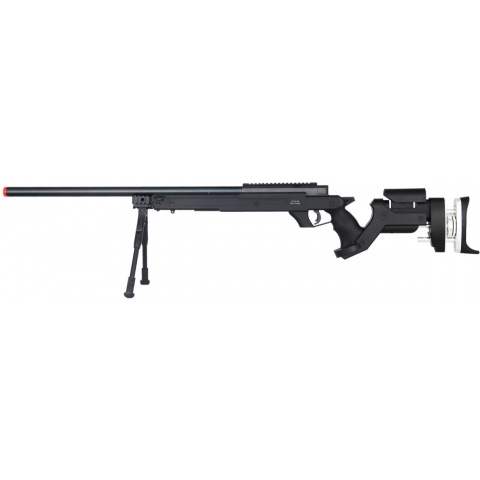
WELL Airsoft MB05BBIP L96 Bolt Action Rifle w/ Bipod – BLACK
From $156.00 high $161.49
Save $5.49 (3%) versus the highest
Compare prices for WELL Airsoft MB05BBIP L96 Bolt Action Rifle w/ Bipod – BLACK -
G&G SSG-1 USR AEG – Special –
From $309.00 high $356.00
Save $47.00 (13%) versus the highest
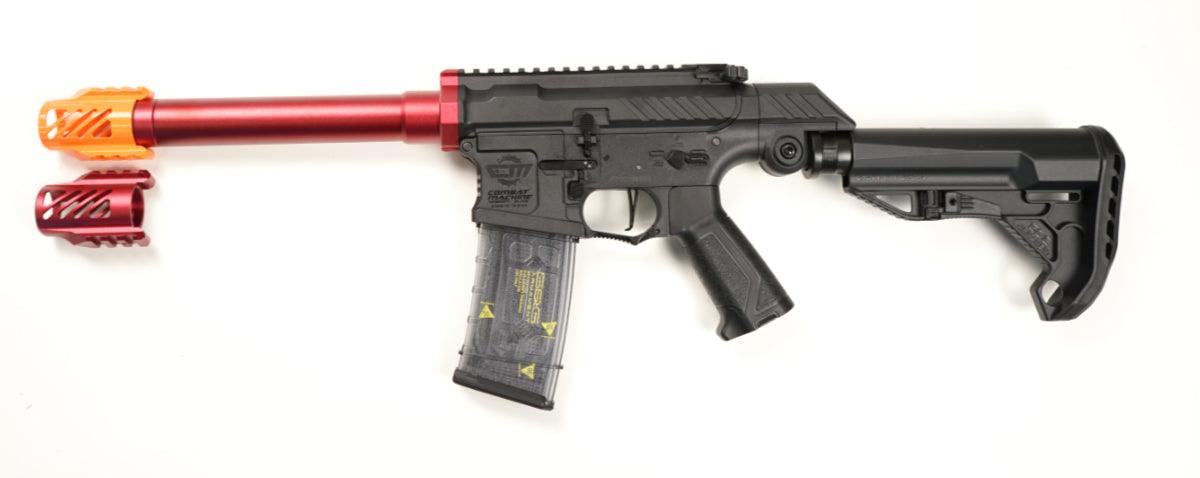
Compare prices for G&G SSG-1 USR AEG – Special –