
Airsoft Masks and Goggles: The Complete Safety Guide
Sealed ANSI Z87.1 goggles are the one piece of airsoft gear you cannot compromise on. What to buy, mesh vs polycarbonate, and how to stop fogging.
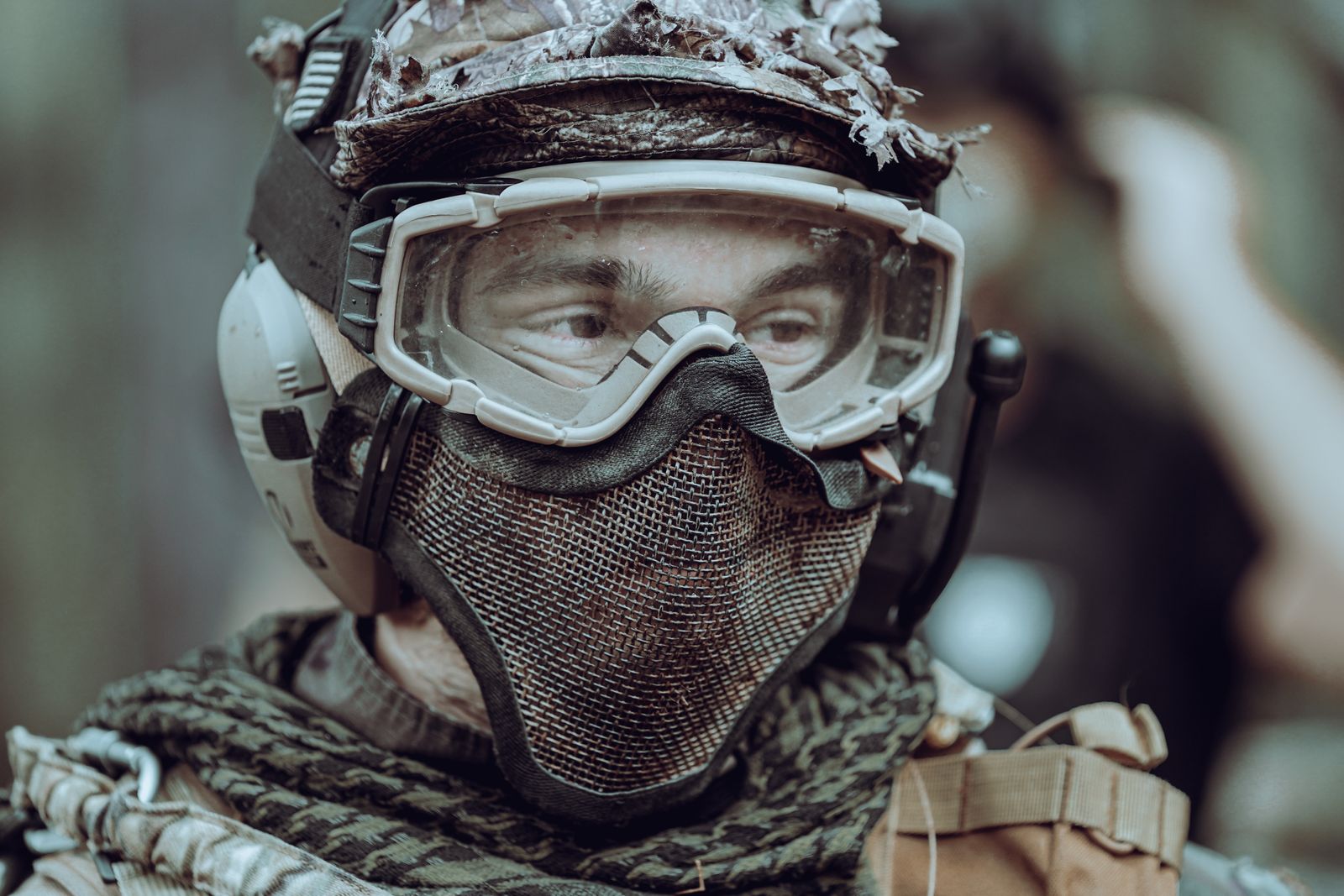
Eye protection is the only piece of airsoft equipment where the wrong choice has permanent consequences. Everything else on your kit list affects how much you enjoy the game. This one affects whether you keep your sight.
The rule is short: sealed goggles rated to ANSI Z87.1, worn at all times inside the field. Everything below is detail on top of that.
Quick picks
| Category | What to look for | Typical range |
|---|---|---|
| Best all-round | Sealed thermal-lens goggles, Z87.1 rated | $40–90 |
| Best full protection | Goggles + mesh lower mask | $50–110 |
| Best for glasses wearers | OTG (over-the-glasses) sealed goggles | $45–95 |
| Best budget | Basic sealed Z87.1 goggles | $20–40 |
| Best for younger players | Full-face mask, single piece | $35–80 |
What the rating actually means
ANSI Z87.1 is the US standard for impact-rated eye protection. It is stamped on the lens or frame. If your eyewear does not carry it, treat it as decoration.
Three things people wrongly assume are protective:
- Prescription glasses. Not impact rated. They can shatter, which turns one hazard into two.
- Sunglasses. Same problem.
- Unrated goggles bundled with a starter kit. Extremely common, frequently unrated. Check for the stamp.
Sealed goggles, not shooting glasses
This is the distinction that catches people out. Shooting glasses are impact rated but have open sides and gaps at the top and bottom. A 6mm BB is small enough to get around the frame, and BBs ricochet off walls and cover in ways that make side entry entirely realistic.
Sealed goggles form a closed perimeter against your face. Most fields require them for exactly this reason.
Mesh vs polycarbonate lenses
| Polycarbonate | Mesh | |
|---|---|---|
| Fogging | Fogs — thermal lenses help | Never fogs |
| Clarity | Excellent | Slightly obscured |
| Eye safety | Full protection | Small fragmentation risk |
| Best use | Eyes | Lower face only |
Use polycarbonate for your eyes. Mesh eye protection exists and never fogs, but a BB can fragment on the mesh and send pieces through. Most serious players and many fields consider mesh acceptable for the lower face and not for the eyes.
Use mesh for your lower face. Here it is ideal — no fogging, breathable, and it stops a BB comfortably.
Fogging, and how to actually fix it
The most common complaint in airsoft, and the reason people lift their goggles — which is the single most dangerous thing you can do on a field.
In rough order of effectiveness:
- Buy thermal (dual-pane) lenses. Two layers with an air gap between them, the same principle as double glazing. This solves fogging more thoroughly than every other fix combined.
- Fitted fans. Small battery fans that move air across the lens. Very effective, slightly noisy.
- Anti-fog spray or gel. Helps, wears off during a game, needs reapplying.
- Ventilation gaps. Do not create them by loosening the goggles. That defeats the seal.
If you play in cold or humid conditions, buy thermal lenses first rather than fighting a single-pane lens with sprays.
Protecting the rest of your face
Eye protection is mandatory. Lower-face protection is optional and strongly advised.
Teeth are the second most common serious airsoft injury. A BB to an incisor at close range can chip or break it, and dental work costs considerably more than a mesh mask.
Options, roughly in order of coverage:
- Mesh lower mask — the standard choice. Breathable, no fogging, attaches to most goggles.
- Full-face mask — single-piece goggle and face combination. Best coverage and simplest for younger players, but hotter and can interfere with aiming down a stock.
- Neck gaiter or shemagh — covers the neck, which regulars consistently name as one of the worst places to be hit.
- Mouth guard — cheap, invisible under a mask, and worth it if you play without lower-face protection.
For younger players, full-face protection matters more, not less. See how old you have to be to play airsoft.
If you wear glasses
Two workable routes. OTG goggles are sized to fit over prescription frames — the simplest option, though bulkier and more fog-prone because of the extra trapped air. Alternatively, prescription inserts mount inside compatible goggles, which is neater and more expensive.
What does not work is wearing prescription glasses alone.
Buying checklist
- ANSI Z87.1 stamp present
- Sealed design, not open-sided shooting glasses
- Thermal or dual-pane lens if you can afford it
- Compatible with a helmet if you plan to wear one
- Strap that actually holds — cheap elastic stretches within a season
- Lower-face protection, mesh preferred
Putting together a full first setup? See our beginner guide for the complete list.
Why lenses fog, and what actually stops it
Fogging is not a defect — it is condensation. Warm, humid air from your face meets a lens that is colder than that air, and water condenses on the inside. Everything that works, works by attacking one of those three variables.
| Fix | How it works | Effectiveness |
|---|---|---|
| Thermal (dual-pane) lens | Air gap keeps the inner pane near face temperature | Very high — the real fix |
| Fitted fan | Moves humid air out before it condenses | High |
| Anti-fog coating or spray | Makes water sheet rather than bead | Moderate, wears off |
| Venting the goggle | Breaks the seal | Do not — defeats the protection |
| Lower-face mesh instead of solid | Vents breath away from the lens | Moderate and free |
The order of attack is simple: buy thermal lenses first, add a fan if you still fog, and treat spray as a field-day patch rather than a solution.
Two behavioural fixes matter as much as equipment. Breathe downward rather than up into the goggle — a mesh lower mask helps enormously here. And put your goggles on before you get hot, because a cold lens meeting an already-sweating face is the worst combination.
What ANSI Z87.1 actually certifies
Z87.1 is an impact standard, and the stamp is what separates protective eyewear from tinted plastic.
For our purposes the relevant point is that rated lenses are tested against high-velocity impact from small projectiles — the exact failure mode a 6mm BB represents. Unrated polycarbonate may survive a hit, or may crack and send fragments toward the eye it was supposed to protect.
Look for the marking on the lens or frame itself. If a product listing claims a rating but nothing is stamped on the item, treat the claim as marketing.
The three false friends
- Prescription glasses. Not impact rated, and the frame concentrates force. They can shatter.
- Sunglasses. Same, plus they darken an already dim indoor site.
- Ski or motocross goggles. Sealed and comfortable, but rated for impacts of a different kind. Some are fine; most are untested against BBs.
Fit, and the gap most people miss
A sealed goggle is only sealed if it actually contacts your face all the way round. The failure point is almost always the bridge of the nose, where a gap can let a ricochet in from below.
Check it in a mirror in a lit room: put the goggles on, look straight ahead, and see whether any light comes through around the nose or temples. If it does, BBs can too.
Common causes of a poor seal are a strap set too loose, a frame too wide for your face, or a helmet pushing the top edge forward — see our helmet guide for that last one.
Cleaning without ruining the lens
Polycarbonate scratches easily and anti-fog coatings are delicate. More lenses are destroyed by cleaning than by BBs.
- Rinse first. Grit wiped across a lens is sandpaper. Water before cloth, always.
- Microfibre only, and never a dry paper towel.
- Do not wipe the inside of an anti-fog-coated lens if you can avoid it — the coating rubs off. Rinse and air dry.
- No solvents, alcohol or glass cleaner. They strip coatings and can craze polycarbonate.
- Store in a soft bag, not loose in a kit box with magazines.
Replacing them
Eye protection is consumable. Replace a lens when it has taken a direct hit at close range, when it is scratched enough to distort vision, when it is crazed or cloudy, or when the anti-fog has stopped working and no longer responds to treatment.
A lens that has already absorbed a close-range impact may have micro-fractures you cannot see. Given the consequence of a failure, that is not a component to run to destruction.
Lens tints and when to use them
| Tint | Use |
|---|---|
| Clear | Indoor CQB, dusk, overcast — the safe default |
| Smoke / grey | Bright open outdoor play |
| Yellow / amber | Low light and woodland — raises contrast |
| Mirrored | Bright sun; hides your eyes, cuts low-light vision sharply |
If you own one lens, own a clear one. A tinted lens indoors is a genuine hazard, and most fields run a mix of light conditions across a day.
Frequently asked questions
What eye protection do I need for airsoft?
Sealed goggles rated to ANSI Z87.1. Open-sided shooting glasses are not sufficient because 6mm BBs can get around the frame, and ricochets make that a realistic risk.
Can I wear regular glasses for airsoft?
No. Prescription glasses and sunglasses are not impact rated and can shatter. Use over-the-glasses goggles or prescription inserts in rated goggles instead.
Are mesh goggles safe for airsoft?
Mesh is fine for lower-face protection but is not recommended for the eyes, because a BB can fragment on the mesh and send pieces through. Use polycarbonate lenses for your eyes.
How do I stop my airsoft goggles fogging?
Thermal dual-pane lenses are by far the most effective fix. Fitted fans work well too, and anti-fog sprays help temporarily. Never loosen or lift your goggles to vent them.
Do I need a full face mask for airsoft?
Eye protection is mandatory; lower-face protection is optional but strongly recommended. Dental damage is a common airsoft injury and a mesh lower mask costs far less than dental work.